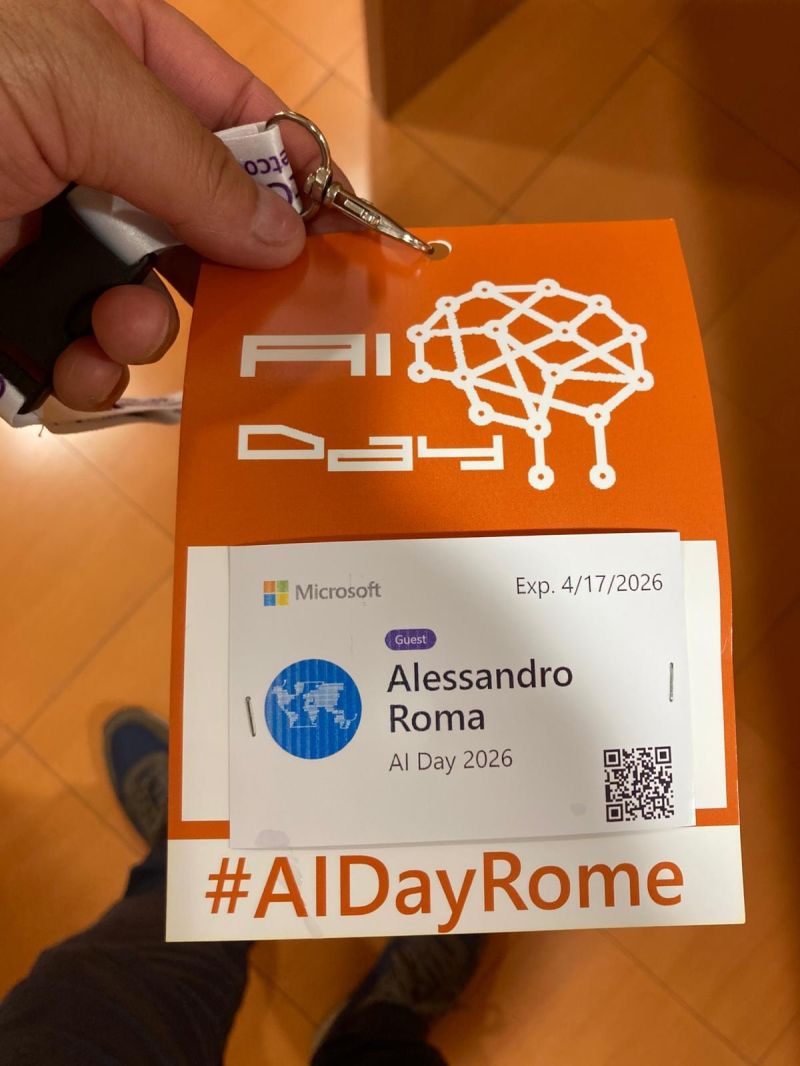
Today I was in Rome for AI Day 2026, a Microsoft event. Packed room, well-prepared speakers, concrete use cases. The kind of event where you risk going home convinced that AI will change everything — in a few years. Instead, I came home convinced it's already changing things, right now, for those who decide to use it.
The point isn't the technology itself. It's how you integrate it into daily work.
What I've seen
In recent months I've seen directly how much these tools can make a difference in the field. They don't replace commercial work — they make it more prepared, faster and more effective.
A sales rep with 80–100 active clients can't prepare every visit as if it were the first. There isn't time. What happens in practice: you go to the client, open the CRM, look at the last order, and improvise the rest. It works — but you leave part of that visit's potential on the table.
AI changes this equation. Not because it performs miracles, but because it compresses in two minutes a preparation task that used to take twenty.
"Whoever prepares the visit is always ahead of whoever improvises. Today AI lets you do it better and faster."
Three things I'm already applying
1. Automated pre-visit brief
Every morning a flow generates a brief for each visit planned that day: client history, period target, products to focus on, critical point to manage. The agent receives it on Teams at 7:30. Two minutes of reading, visit prepared.
2. Recurring objection analysis
Once a week I pass visit notes to an AI tool with a simple question: "Which objections come up most often? Which products are refused and for what reasons?" In five minutes I have an analysis that would have taken me an hour — and done worse.
3. Area meeting preparation
Area performance, agents above and below target, period trends, key points to discuss. I used to build this in Excel in 2–3 hours. Now an automated flow generates it with an AI narrative layer. I spend 20 minutes reviewing and personalising it.
No advanced technical skills needed. Start with just one thing: the pre-visit brief. Take the data you already have, write a simple prompt, test with ChatGPT or Copilot. If it works, automate it. The learning curve is low — the return, not so much.
What AI won't do in this sector
AI doesn't replace territorial knowledge. It doesn't know that particular pharmacist prefers to be contacted on Thursdays. It doesn't know there's a new orthopaedic centre in the area taking clients. It doesn't know the purchasing manager changed supplier for personal reasons that no data records.
Those who have been in the field for years know these things. AI amplifies that knowledge — it doesn't create it. And this, for those with real channel experience, is a huge advantage over those using AI without that context.
Whoever uses AI in sales today has an advantage. Not over those who will never use it — over those still waiting.