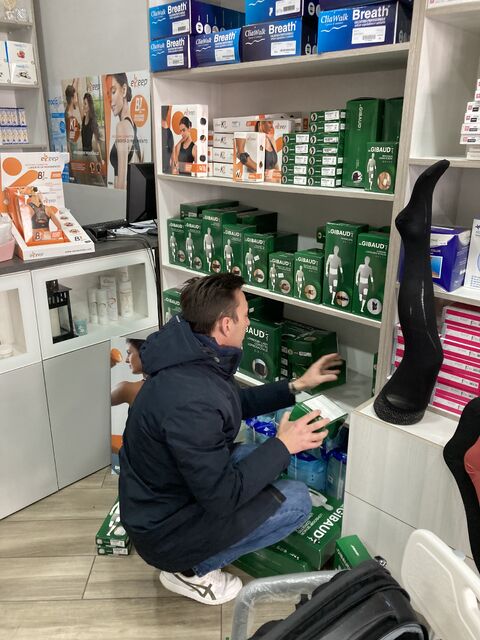
Every number we see in the system comes from real work in the territory. When a pharmacist places a reorder, rotates stock, moves a product from one aisle to another — all of this turns into data we read in our reports. But data doesn't manage inventory. The person who is physically there does.
I learned this the hard way, in my first years in the pharmacy channel. I'd look at sell-out reports, see a product stagnating, wonder why it wasn't moving. Then I'd go in person and understand: it was in the storeroom instead of on the shelf. Or it was on the shelf but in the wrong corner, behind a competitor brand, with no price label. The data said "high stock", but the cause was zero visibility.
What a report sees and what it doesn't
A CRM system tells you how much a client has ordered, how much they've sold, what the estimated stock is. It doesn't tell you how the product is displayed, whether the staff know it, whether it's in an accessible spot or buried at the back of a shelf no customer reaches.
In the pharmacy channel in particular, high stock is often a problem of physically missed rotation, not absent demand. The product is there, the potential customer is there, but neither knows about the other.
"An unsold product isn't always an unwanted product. Sometimes it's simply an unseen product."
Shelf work: what we do in practice
Every joint call with agents includes a shelf audit phase — not as a separate activity, but as a natural part of the visit. We walk in, greet them, and while the agent talks with the pharmacist I look at the shelf. I observe:
- Product position relative to eye level (the 90cm–160cm range is where sales happen)
- Visible facings: how many SKUs are displayed face-forward vs sideways
- Price label: present, readable, up to date
- Visible stock: the pharmacist reorders when they see the shelf nearly empty, not when the system signals low stock
- Relationship with competitor brands: where we're positioned relative to Gibaud, Ro+ten, FGP
This analysis takes five minutes. Results go directly into the app — visit notes, display photo, actions agreed with the client. All tracked, all available for the next visit.
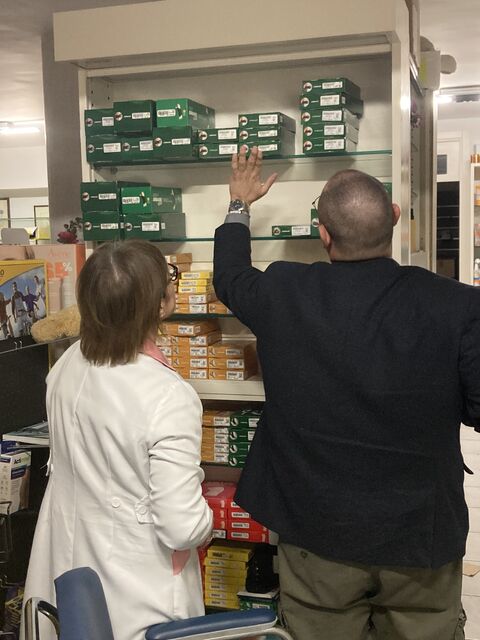
A concrete case: Dorsolombotech in a medium-sized pharmacy
Six months ago, an agent had a pharmacy with high stock on a premium lumbar brace. Almost zero movement for three months. Zero sell-out, zero reorders. The system suggested "verifying local demand".
We went together. The product was in the storeroom — the pharmacist had never put it on the shelf because "they didn't know where to put it". Twenty minutes: we found a space, displayed it correctly, gave the staff a mini-training on indications. The following month: four units sold. The next: seven.
Eye level covered? Price label readable? Visible stock of at least 2 units per SKU? Staff who know the product? If you answer no to two of these four, the stock issue isn't a market problem — it's an operational one.
Data and physical presence: not an either/or
I'm not saying reports are useless. I use them every day — I built them myself. The point is that data tells you where to look, not what to do. High stock on a product is a signal — but the cause has to be found in the field, not on a screen.
The area manager who never leaves their reports is like a doctor making diagnoses without examining the patient. Numbers are symptoms. Diagnosis requires direct contact.
Next time you see an anomalous stock figure in your report, before calling the client to "understand the situation" by phone, consider going there in person. Often the answer is right in front of your eyes — literally.