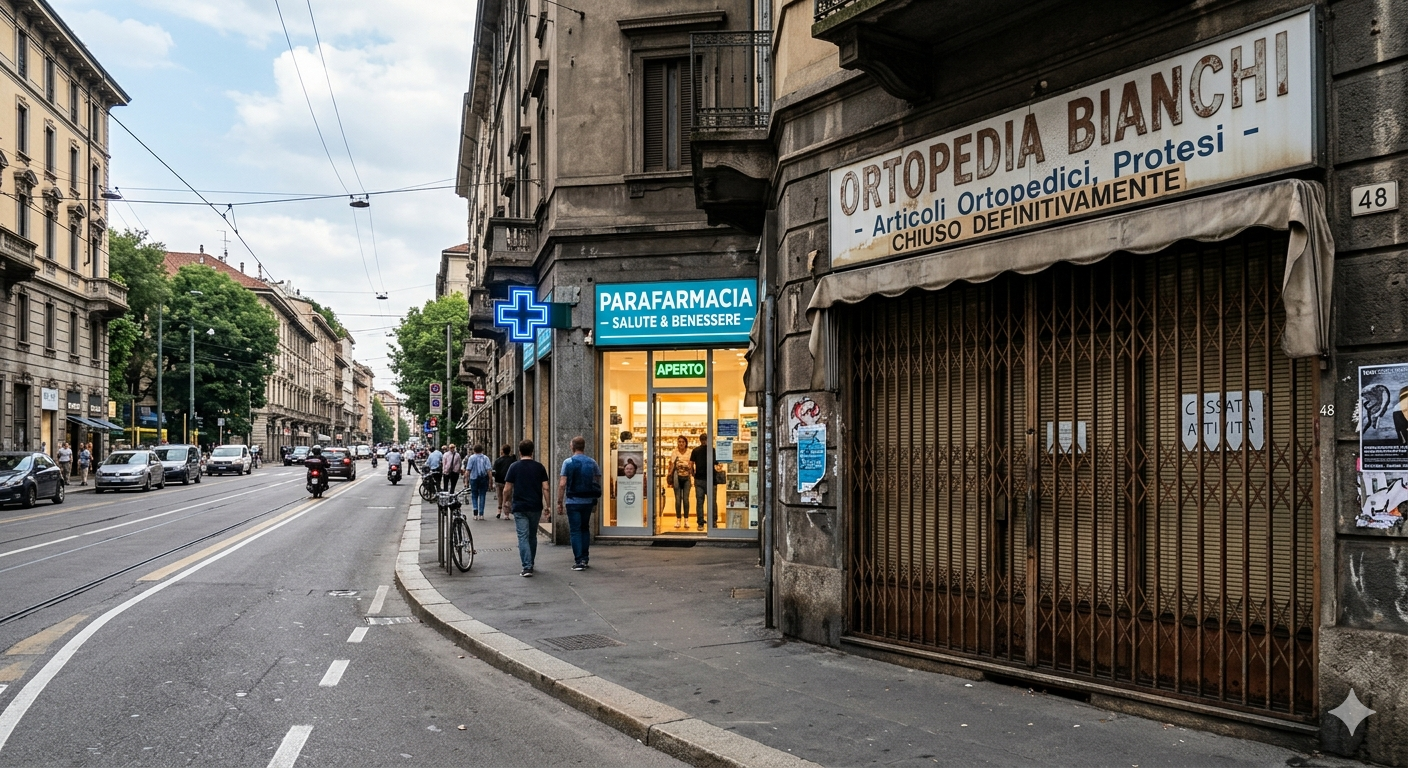
We could have gone back to the car and moved on to the next client. It's the most comfortable choice, the one that requires nothing. Instead, we looked at each other, walked 100 metres on foot and walked into the direct competitor — a contact we had never approached.
"No appointment. No prepared presentation. Just two people knocking on the right door at the right moment."
What happened
The owner was there. They listened. They were happy to see us.
New client activated.
It wasn't luck. It was a choice: the choice not to accept that a morning was lost just because one appointment had fallen through.
The difference is 100 metres
Those who work in the field know it: days rarely go as planned. An unreachable client, a closed shop, a last-minute cancelled appointment — these things happen every week.
The variable isn't what happens. It's what you do after.
A sales rep who goes back to the car and marks "client unreachable" in the CRM is choosing to stop. A sales rep who looks around and walks 100 metres is choosing to continue. Over time, this difference turns into results.
Before each day of visits, look at the map and mark potential points of sale within 200–300 metres of each fixed appointment. They're your plan B — and they often become plan A.
The lesson for network managers
When I tell this kind of story to my agents, I don't do it to motivate them. I do it to show a method. The difference between an agent who consistently delivers results and one who depends on the luck of confirmed appointments isn't talent: it's the ability to work even when things don't go as planned.
And this ability is trained in the field, not in the meeting room. It's trained by being next to the agent when the shop is closed — and choosing together to walk those 100 metres.
The difference between a lost day and a winning one is sometimes just 100 metres.